What Is Breathwork and How Is It Different From Meditation?
Breathwork and meditation are not the same thing. Here's an honest breakdown of how they differ, how they work together, and why understanding both can transform your practice.
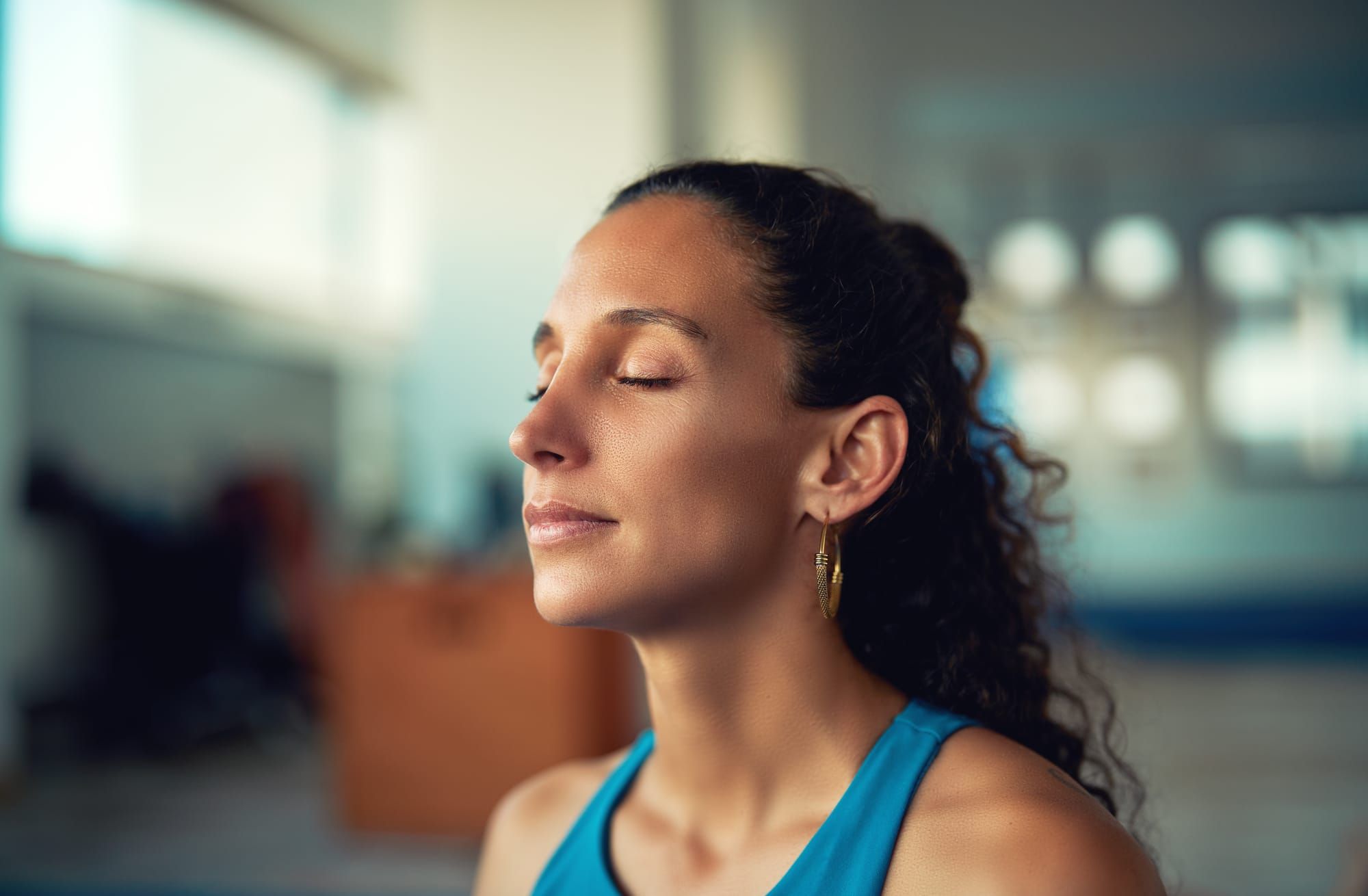
If you have spent any time in wellness spaces, online or otherwise, you have probably noticed that breathwork and meditation are often mentioned in the same breath, so to speak. They show up in the same articles, the same app menus, the same conversations about mental health and stress relief.
And yet they are not the same thing.
The confusion is understandable. Both practices involve slowing down. Both ask you to pay attention. Both can produce a profound sense of calm when done consistently. But they work differently, they feel different, and they serve different purposes. Understanding the distinction is not just academic. It can genuinely change how you approach both.
What Meditation Actually Is
At its core, meditation is a practice of awareness. You choose an anchor, most commonly the breath, a sound, a mantra, or a body sensation, and you practice returning your attention to that anchor whenever your mind wanders. Which it will. Constantly. That's fine.
The breath in meditation is used as a focal point, not as something you actively manipulate. You are not trying to breathe in a particular way. You are simply noticing the breath as it is, the natural rhythm of it, the rise and fall, the texture of air moving in and out. It is a passive relationship with your breathing.
The goal, if you can call it that, is to cultivate a quality of attention. Over time and with practice, meditation builds your ability to observe your thoughts and feelings without being completely hijacked by them. It creates space between stimulus and response. It teaches you, slowly and imperfectly, to be present.
What Breathwork Actually Is
Breathwork is different. Here, the breath is not just an anchor. It is the active tool.
Breathwork involves deliberately changing the pattern, pace, or depth of your breathing to produce a specific physiological or psychological effect. You are not observing your breath. You are directing it, shaping it, using it with intention.
Different breathwork techniques produce different results. Some are designed to calm your nervous system rapidly, like the 4-7-8 technique or box breathing, which slow your heart rate and signal safety to your body. Others are more activating and energizing, designed to increase focus or release stored tension. Some more advanced practices, like holotropic breathwork, can produce deeply altered states and are typically done with guidance.
The common thread is that you are using the mechanics of breathing as a direct intervention. You are not waiting for calm to arrive. You are physiologically creating the conditions for it.
The Key Differences
The simplest way to put it is this: meditation is about observing, breathwork is about doing.
In meditation you watch the breath. In breathwork you work with it. Meditation tends to be slower and more open-ended, a practice of sitting with whatever arises. Breathwork tends to be more structured and technique-driven, with a specific pattern to follow and a specific outcome in mind.
Meditation asks for patience and gradually builds a relationship with your inner world over time. Breathwork can produce noticeable effects quite quickly, sometimes within just a few minutes of practice.
Neither is better than the other. They are simply different instruments playing different roles.
How They Work Together
This is where it gets interesting, and where my own practice lives.
I use breathwork as part of my meditation rather than as a separate activity. Before settling into a meditation session, a few minutes of intentional breathing, something as simple as slowing my exhale or doing a few rounds of box breathing, helps regulate my nervous system enough that sitting still feels less like a battle. It takes the edge off the restlessness. It creates a kind of runway for the meditation to land on.
Think of it like this. If your mind is a snow globe that has been shaken up, breathwork is what lets the snow begin to settle. Meditation is what you do once the water starts to clear.
For people who struggle with traditional meditation, and there are a lot of us, breathwork can be a genuinely useful entry point. It gives your body something active to do. It produces tangible, fairly immediate results, which makes it easier to stay motivated when you're first building a practice. And it naturally leads you toward the kind of calm, focused state where meditation becomes more accessible.
A Simple Place to Start
If you want to try breathwork without overcomplicating it, box breathing is one of the most well-researched and widely used techniques. It is simple, effective, and takes about four minutes.
Breathe in for a count of four. Hold for a count of four. Breathe out for a count of four. Hold for a count of four. Repeat.
That's it. Four rounds of that, done slowly and without forcing anything, and most people notice a measurable shift in how their body feels. Less tight. Less reactive. More settled.
Try it before your next meditation session and notice whether the meditation itself feels any different afterward.
Why Both Practices Matter
We live in bodies that are chronically stressed. Most of us spend large portions of our day in a low-grade fight-or-flight state, driven by deadlines, notifications, uncertainty, and the relentless pace of modern life. Our nervous systems were not designed for this kind of sustained activation.
Both breathwork and meditation are, at their heart, ways of coming back to yourself. Of reminding your body and your mind that you are safe, that you can slow down, that the present moment is survivable and often, when you actually stop to look at it, quietly beautiful.
You don't have to choose between them. Used together, they are one of the most accessible and genuinely effective tools available for anyone trying to find a little more peace in a noisy world.
Start with the breath. It has been there the whole time, waiting for you to notice it.
Want to go deeper? The Offline Zen newsletter explores practices like these every week, along with honest reflections on what it actually means to build a calmer life. Subscribe below, it's free.